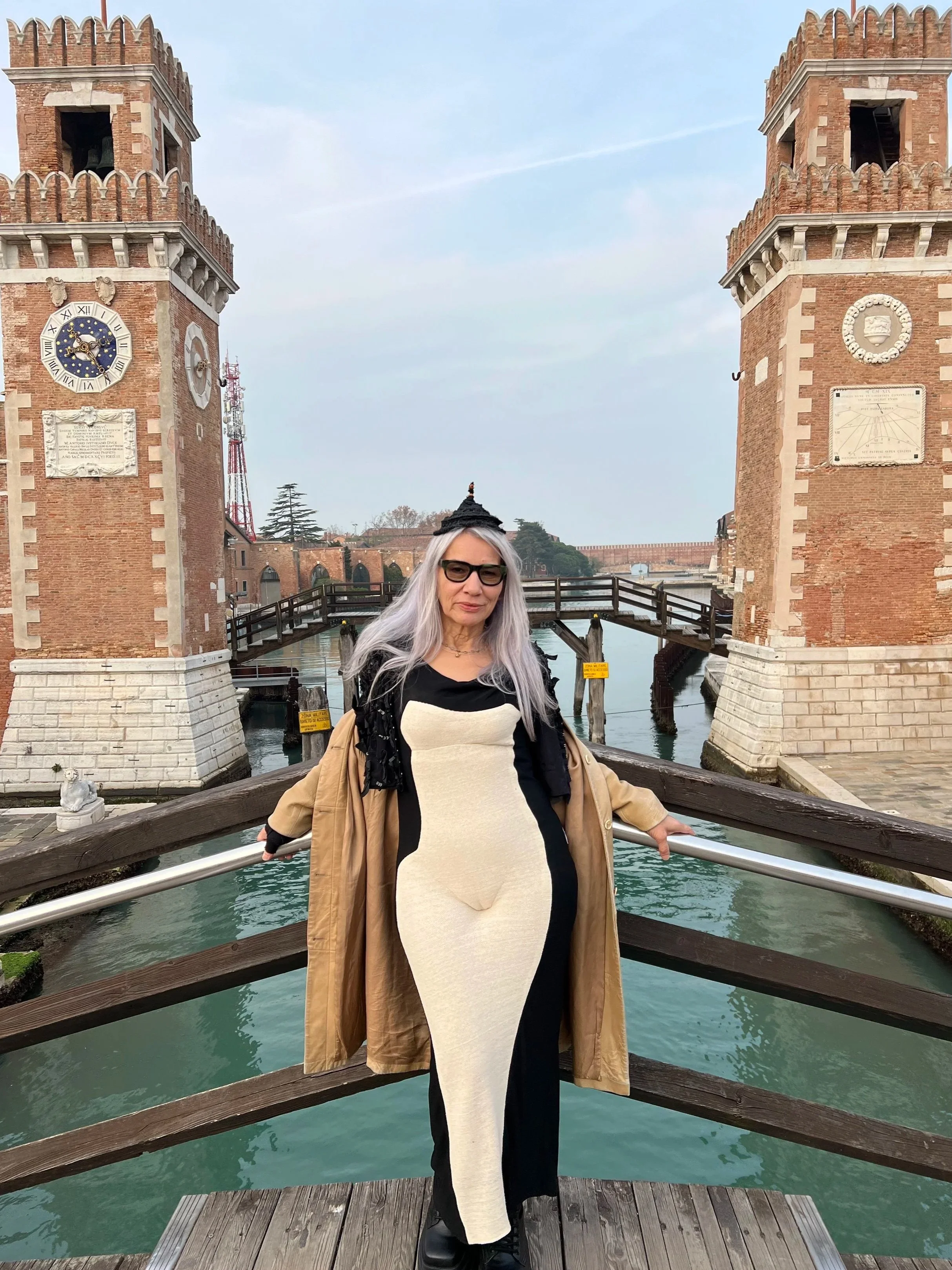
Marjorie Abela’s work investigates the emotional and physical language of the human body as a site of vulnerability, memory, and transformation. Working across sculpture, drawing, and textile processes, she moves fluidly between materials—clay, fabric, wax, and paint—treating them as interconnected means of exploring lived experience.
Her practice centres on the female figure, presenting women who are physically powerful, emotionally complex, and unapologetically present. Rejecting idealisation and the conventions of the male gaze, her figures embody states ranging from tenderness and sensuality to pain and defiance. Through fragmentation, distortion, and acts of repair, Marjorie externalises the psychological traces of trauma while revealing the resilience embedded within the body.
Combining her background in fine art and couture techniques, Marjorie’s work occupies a space between sculpture and the language of the body itself—at once intimate, visceral, and timeless
Biography
Marjorie Abela is an English artist of Maltese and North African heritage whose practice spans sculpture, drawing, and textile processes. She investigates the physical and emotional language of the human body and mind, often working with clay to explore the sensuality of flesh and the complexities of human emotion.
Marjorie studied painting at the Central School of Art & Design before continuing her training in pattern cutting and garment construction at the London College of Fashion. She later worked for the couture house Belville Sasson during the 1990s.
In her twenties, an encounter with antique millinery fabrics led her to create a series of distinctive hats. Her headwear was commissioned by the fashion designer Kenzo for his 1991 catwalk show.
After a long pause in her creative practice, Marjorie began working with clay in 2015, discovering a powerful affinity with three-dimensional portraiture and the human form. Today her work draws on both fine art and couture techniques, combining sculptural and textile traditions in an intuitive and materially exploratory practice.